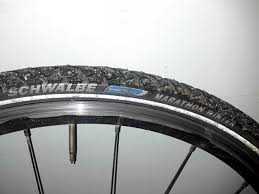
studded tires only on front

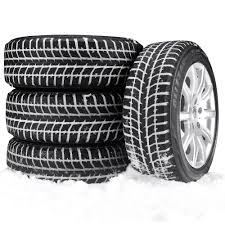
If you often find yourself needing to drive in snowy or severe winter conditions, winter tires should be installed on all four wheels. But if you only use two winter tires, install them on your vehicle’s drive wheels. Check your vehicle owner’s manual, or with the vehicle manufacturer, for more information. The right tires for you depend mainly on when, where and what you drive. Most of us only encounter winter conditions such as ice, slush, or hard-packed snow on a limited basis. With this in mind, good quality all-season tires may be fine for you. However, if you live in an area that regularly receives snow, or if you go skiing often or enjoy other winter sports, your vehicle should be outfitted with four winter tires. A performance-based standard (mutually agreed upon by the U.S. Rubber Manufacturers Association and the rubber Association of Canada) specifically designates passenger and light truck winter tires that provide a higher level of traction in harsh winter conditions.

Winter tires that meet these standards are identified by a snowflake on a mountain symbol next to the M&S symbol on the tire sidewall. An M&S designation means the tire is rated by the manufacturer for use in mud and snow. When you’re buying tires, remember to tell your local tire retailer what kind of road and weather conditions you drive in, so you get tires that are best suited for your needs. For more information on M&S designation please visit the Rubber of Association of Canada website. Having the right tires can make a difference when you’re driving in winter conditions. Beyond the right tires, here are some tips in case you get stuck in the snow: As a tire’s tread wears away, its traction, cornering and braking is less reliable. Most tires have tread wear indicator bars moulded into the tread face. It’s time to replace your tires when the tread wear indicators in any two adjacent grooves of the tread are contacting the road. Tires that are worn more than 50 per cent shouldn’t be used in severe winter conditions.
Keeping your tires properly inflated is the single most important part of tire care. That’s why we recommend you regularly monitor the air pressure in your tires. The tires on your car were engineered to work best with a certain amount of air pressure. A tire that is improperly inflated is prone to irregular wear, poor handling, traction loss and reduced tread life. The maximum inflation pressure can be found on the side of your tire. This is not necessarily the correct inflation level for your tires. Always refer to the inflation level recommended by the vehicle manufacturer. This can usually be found in your owner’s manual, posted on the edge of the driver’s door, or inside the glove box door. Only check your tire pressure when the tires are cold. You should also take into account the temperature outdoors when you operate your vehicle, as this directly affects tire pressure. A change in temperature means a change in tire pressure. Use a good quality tire gauge and check the tire pressure every few weeks, prior to any long trip, when moving a heavy load, and when towing a trailer or other vehicle.

Your spare tire should be checked at the same time. Properly storing your winter tires will ensure they last longer and are ready to go for the next season. Winter tires should be placed in a cool, dark, and dry indoor location. Store them away from electric motors, since the ozone produced by electric motors can damage the tire rubber. If you are going to store tires while they are still mounted on wheels, the tire pressure should be reduced to 15 pounds per square inch and reinflated when you mount them on your vehicle.
f1 wheel and tyre trading hours Most standard summer and wide, high-performance summer tires are not recommended for snowy or icy conditions.
canadian tire store ajaxThey are designed to provide optimum dry-condition performance and good handling in wet conditions.
f1 wheel and tyre finance
All-season tires are not designed to excel in any one condition - these tires are a compromise for all conditions. They are adequate at best in wet, dry, or snowy conditions. Specifically designed to provide better traction and braking in deep snow conditions, winter tires also help with greater stability and control on slushy roads. Rubber on winter tires stays softer and grips up to -30C. Their deep grooves are designed for snow and slush, and they brake 30 to 60 feet shorter than all-seasons on ice when travelling at 50 km/h. The use of studded tires is permitted in British Columbia between October 1 and April 30. But, remember that when studded tires are used on the front wheels of a vehicle, the law requires you to also use them on the rear wheels. Wide, high-performance tires are not suitable for use on snow-covered roads, other than those that are specifically designed as winter tires. Acceleration, braking and cornering require a coordinated effort from all four tires.

Substituting tires that differ in design, construction or their intended use (i.e. summer, winter or all-season tires) can upset this balance. Maintain the same type of tires on all four wheels — particularly for all-wheel drive, four-wheel drive and SUVs. If you are unsure what conditions the tires on your vehicle are designed for, check with your local tire retailer. It would be great if a combination of all-season and winter tires on an all-wheel drive, four-wheel drive or SUV gave us the best of both worlds. Unfortunately, this isn’t the case.Given your particular situation, and that you would be using winter tires on any vehicle you use, I can't recomend that you change vehicles.Yes, all wheel drive has the benefit of all 4 wheels applying power, and with modern traction control you don't even need limited slip differentials to take full advantage of that on public roads. This benefit is realized not only with acceleration, but also allowing for controlled engine braking and controlled cornering in icy and heavy snow conditions.

The corner drifting, tire spinning, driving enthusiast in me says STI all the way, but that is not likely your attitude or need for driving.Front wheel drive is the next forgiving, followed by rear wheel drive. In the case of your Miata, even the rear wheel drive isn't nearly the issue it was with a pick up truck as the wheel base is so short.All wheel drive kills fuel economy, so it is worth it if you are going to be driving in conditons requiring it consistently, or if a condition exists that no other vehicle can acomplish the task. If you live out in the middle of nowhere on sketchy roads, snow and ice are more than just an occasional happening, and need a family car that makes you feel secure in case the scat really hits the fan, then go for a Forrester or outback.Your current front wheel drive model with snow tires will conquer all but the nastiest icy and questionably code compliant steep driveway. There are actually many articles with interviews of performance drivers that prefer front wheel to all wheel drive in most conditions so long as the proper tires are mounted.

Driving front wheel drive in snow has never been a problem for me, following proper safety distance and speed considerations. The only time my truck was a detriment was in chain enforcement zones where the snow was just merely slush. My Subaru was purchased for fun and not due to any need even though I spent most weekends in the mountains skiing or mountain biking.I don't know how steep your driveway is or what kind of winter weather you'll have, but the general rule is that AWD is nearly always the best choice in dealing with adverse road and/or weather. All of the power is put to all wheels - meaning 100% of the weight is on top of the motive traction. Front wheel drive has a benefit of having most of the heavy parts’ (engine, transmission) weight on top of the motive traction. Rear wheel drive loses all of the benefits of front wheel drive, but is usually the most rewarding to drive on dry pavement.So far, so what? The WRX is tamed rally car, and has lower ground clearance. Those two things are meant for driving fast and at the limits of adhesion.

It's a fun car to drive, has strong acceleration, braking, and sticks to the road like glue in the twisties. The low ground clearance and sticky tires are bad for snow, so snow tires are probably going to be required. With the lower ground clearances, you may face problems getting snow tires fitted on the car. If the state you reside allows studded tires, get a pair for your FWD car and put them on the front. Better if all tires are studded. My studded tires amazed me; much better traction that plain snow tires.If you don't mind ‘settling’, the non-WRX Impreza may work with all season radials. If it's just the horsepower that makes you interested in the WRX, I am aware of at least one other Subaru that offers a turbocharged engine.EDIT: The one Subaru sharing the WRX engine is the Forester XT; turbocharged 2.0 liter H-4 - 250hp. The Outback offers a 3.6 liter H-6, developing 258hp.Also, edited for grammar.RWD gains traction going up hill, FWD loses traction going up hill. A typical modern RWD sedan has close to 50/50 weight distribution..

RWD Tesla has 48/52 I believe.. A typical FWD sedan has 60/40.. More weight over the tires means more traction BUT FWD has 2 things working against it in the UPHILL situation that most people blatantly don't understand! Acceleration (even mild) causes weight to TRANSFER AWAY FROM THE FRONT WHEELS and you guessed it, transfer TO the rear! Secondly, the uphill incline ALSO transfers weight off of the front and onto the rear ! These 2 things work against a FWD. They both become a major ADVANTAGE for a RWD car because traction is increased by both forces (acceleration and uphill gravity). So a FWD might have 50% of its weight on the drive axle going up hill and accelerating and a RWD can have 60% in the same situation, giving it roughly 10% better traction. Contrary to outdated myths and rumors, RWD is good in the snow. Automakers don't make them as much for lower end cars because they aren't as space efficient and cost more to manufacture. Stability control, traction control, modern suspension design, modern tires is standard on all post 2012 cars, so there are no safety issues even for novice drivers.
The MYTH that RWD isn't good in the snow exists for a few reasons.. Old cars without any traction or stability features were RWD. They had poor weight distribution with their heavier iron engines and older engineering tech, some had open differentials, crappy tires.. add to that most cars these days that are RWD are performance oriented which means tires and ground clearance not optimal for snow. The automakers didn't help when they started marketing FWD as an advantage when in reality it is not. Both have trade offs. But they are cheaper to build which is why they did this. Ever wonder why expensive cars stayed RWD? Better handling, steering, softer front suspension (better ride quality.. less mass to control up front ), better acceleration traction on grippy surfaces, no torque steer, better steering geometry, better braking, better cornering.. yes most of those advantages also apply in the snow.Man I wish someone would build a non sports car RWD again that's in the affordable range.

Anyway these are not just advantages for the performance minded driver, in my opinion they are good for anyone who appreciates good ride quality, balance, braking, etc.Without a doubt, the AWD vehicle and the WRX would be a very good choice (try to get the latest gen which is a big improvement).Realize though that not all AWD systems are created equal. They all have some sort of differential in the center that distributes torque to the two axles. Many of them are systems that are essentially grafted on to FWD cars. Without going into lots of mechanical detail, these systems incur delay in engaging the rear axle, which leads to spin of the front tires. This is especially true going uphill.The WRX AWD system is, I believe, 50:50 by default, so it shouldn’t have this problem.FWD can be good in snow though that’s largely due to the typical weight distribution of a FWD car compared to a typical RWD car. That weight distribution advantage is lost going up a steep hill though.Another factor to consider is what type of differential (front or rear as the case may be) the car has.