f1 wheel and tyre finance

Tony's Tyre Service Ltd." Firestone - Car Tyres and 4x4 Tyres - Buy 3 Get 1 FREE Buy Three Get One Free Offer is valid from from Monday 3rd April 2017 until Thursday 13 April 2017. Cheapest tyres every day. If you find a lower cash price, we'll beat it by $10 a tyre! Tony's Tyre Service - Price Beat Guarantee! Discount offered off RRP and applies to cash, EFTPOS and credit card sales only and can't be used in conjunction with any promotional offer or discount. Offer valid until December 31, 2016. At Tony’s Tyre Service we give our customers free* puncture repairs on their vehicles. If you ever get a flat, we’ll repair it and put it back on your car for FREE. We will get back to you as soon as possible! Please note, we will only contact you between our office hours. Along with the manufacturer's name and the name of the tyre (e.g. Bridgestone Ecopia PZ-X), there's always a set of numbers and letters that relate to the size of the tyre. Here's a rundown on what those numbers mean:

195 is the width of the tyre in millimetres. 80 is the aspect ratio or tyre profile. R means it is radial construction. 15 is the diameter of the wheel rim in inches.* Information about the data Tyre specific CO2 data * Information about the dataTruck MuddingOffroad Truck4x4 TruckAtvs MuddingDeseil TrucksLifted Chevy TrucksCars And TrucksReal TrucksJeep HondaForwardI mean...maybe its just the mud..but hot damn that duramax looks sexy AF!• Formula 1 cars have around 800bhp but only weigh 640kgs, including the driver. That means they have similar power to a Bugatti Veyron in a car that has around half the weight of a new Mini. An F1 steering wheel costs around £20,000. The drivers have a button which gives the car a "boost" when pressed. This is called the kinetic energy recovery system (KERS). • While aeroplanes use their wings to lift them into the air, F1 cars use theirs to create downforce. This pushes the vehicle onto the track and helps them corner faster and have more grip.

It has been reported that at upwards of 150mph, a Formula 1 car will create so much downforce that it could be driven upside down on the ceiling of a tunnel. • Before the Monaco Grand Prix, the manhole covers on this street circuit are welded down - the downforce created by an F1 car has enough suction to rip them off. F1 helmets are subjected to an 800C flame for 45 seconds (without the heat inside the helmet exceeding 70C). Projectiles are also fired at the visor at around 300mph. • The front suspension of a Formula 1 car is so strong that it can withstand two tonnes of pressure. That means the carbon fibre rods that connect the wheels to the main body could easily cope with an adult bull sitting on them. • When a driver has his foot to the floor and the engine is revving at 18,000rpm, the pistons will be travelling down the bore and back in three-thousandths of a second. • The chassis – the car’s main structure – is incredibly strong. It is made from more than 1,000 different parts of Kevlar, carbon fibre and metal.

• The safety of modern F1 cars means drivers can withstand huge crash impacts. The biggest crash impact on record was suffered by David Purley at the British Grand Prix in 1977. That impact with a wall was estimated at 180g (G-force) – his car went from 108mph to a standstill in just 66cm.
light truck tire recapsHe survived and went on to race again.
toyo tires dealers new jerseyDrivers are subjected to forces of up to 5g – meaning that in a very high-speed corner, their body will experience pressure five times greater than their body weight.
tire sales in temecula ca• Monza in Italy is renowned as the hardest track on brakes. When drivers brake for the first corner they go from 200mph down to 60mph in just over two seconds.
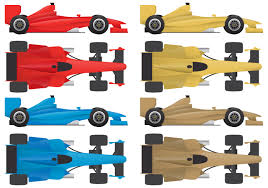
• Under extreme braking, some drivers have said that this force is so great that their tear ducts squirt water into their visors. • Formula 1 brake discs are made from a special, indestructible form of carbon fibre. A set costs several thousand pounds and takes a month to make. When a driver hits the brake pedal, the discs heat up to around 1,200C – typically the temperature of molten lava. • Even after a race has been completed, a car’s tyres will be about 120C – hot enough to cook an egg on. When a car is driving in the wet, the tyres funnel away 250 litres of water every second – enough to fill a large bath. "Black's has your back!" Wheels in North Carolina and South CarolinaFormula 1 teams are driven by annual budgets of hundreds of millions of pounds, but despite the blockbuster figures they are far from typical businesses. For the competing F1 teams, profit is an afterthought and often every available penny is spent in pursuit of victory. The underlying philosophy is that it is better to win on the track and make no profit rather than make money and finish lower down the standings.

This is not solely a sporting concern. Win the championship, and sponsorship and prize money will accelerate. In 2013, the teams which filed publicly available financial statements recorded average revenues of £124.4 million, with Red Bull the highest at £258.2 million. This revenue generally comes from three sources which are fuelled by F1’s huge television audience of just over 425 million viewers. The first key revenue source is sponsorship. Generally speaking, the rear wing, sides of the air intake box and the sides of the car itself are prime logo positions, and a sponsorship deal with a top team involving any one of these locations is likely to cost around £15 million. At the lower end of the spectrum, small logos are often found along the lowest edge of the chassis, but even these are sold for around £1 million with a high-ranking team. The teams’ marketing department typically secures sponsorship, but in some cases it is handed to them on a plate by a driver.

Lower and even mid-ranking teams often take drivers purely on the understanding that companies they have connections with will provide sponsorship. These are known as pay drivers and, when they lack driving talent, the money they bring to the team can make up for it since cash can be used to improve the car itself. Data from F1 trade guide Formula Money shows that around 39 per cent of team revenue comes from sponsorship. Another major source of revenue is the teams’ profit-share with F1. The series paid them £483.6 million in prize money in 2013, according to F1’s latest financial statements, and this source comprises around 34 per cent of team revenue. The third major source is payments from team owners at 20 per cent. In this climate it may be difficult to see why anyone would want to own an F1 team. However, owners can get a financial return in the long run by selling a successful team for more than they paid for it. Additionally, if the owner of a team is a company which sells products, such as Mercedes, Ferrari or Red Bull, they benefit from television exposure of their logos on the cars.

According to Formula Money, in each of the four consecutive years between 2010 and 2013 that Red Bull Racing won the championship, parent brand Red Bull was the best exposed brand in F1. Its advertising value equivalent – the price it would have to pay to buy a similar amount of on-screen exposure – totalled £836.5 million, averaging £209.1 million a year. It goes some of the way to justify the high-speed spending in the sport. A typical mid-ranking team can expect to spend around £158 million a season in four key areas. This covers £36 million in operational spending, £42 million on salaries, including the drivers, £41 million on research and development, and £39 million on production and manufacturing costs. Figures from the Caterham team show that even a car at the back of the grid is worth approximately £1.8 million in material costs and that’s without an engine. The cost of the chassis alone is £1 million, followed by the floor at around £300,000. A single suspension strut can cost upwards of £10,000.

The cost is not just driven by the parts being made from high-tech carbon fibre, but also because of the tight window for manufacturing them. F1 teams rely on what are known as rapid prototype machines which cut carbon-fibre parts with a laser from computer designs. This allows new parts to be designed and manufactured over the few days between races in a bid to boost performance. Even the driver’s seat is specially designed and each is anatomically crafted to suit the contours of the driver’s body. Several seat fittings can be required just to construct it. Incorporating on-board computing power presents its own challenges and increases costs. To make sure that the bodywork is as slender and aerodynamic as possible, all the wiring, electronics and cooling systems must be packed in a tight space around the engine. This is perhaps more difficult than it sounds when there’s 1.25km of wiring and up to 150 on-board sensors to be installed. Tight fit isn’t the only hurdle to overcome.
Having an electronic control box just millimetres away from a white-hot exhaust requires military-standard connectors in the car’s wiring system. Preserving the cables is particularly important since they are transmitting so much information. Some of the sensors give readings up to 1,000 times a second and data is sent wirelessly from the car to the garage. This gives around 1.5 billion samples of data from each race and this is monitored in the garage while the car is on the track, then analysed afterwards by state-of-the-art supercomputers back at the teams’ factories. The car’s technology nerve-centre is the steering wheel and it is one of the few reusable components. It wouldn’t look out of place inside a fighter plane since, except for the throttle and brake pedals, few F1 cars have any controls other than those on the face of the wheel. In its centre is a multi-function LCD screen, which is surrounded by brightly coloured buttons controlling more than 40 functions from clutch, radio and rev limiter to changing the car’s front-to-rear brake bias, and even its fuel mixture.