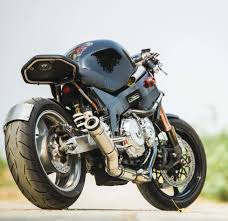
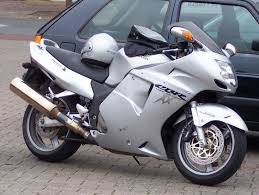
tires for honda blackbird
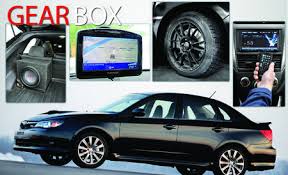
2009 Subaru Impreza WRX Meet Car and Driver’s new Gear Box project car. This 2009 Subaru Impreza WRX is our test bed for all manner of performance and electronic toys. (Take note, nitpickers—we mounted much of the equipment on our long-term WRX STI, seen at bottom.) In the months to come, get our hands-on reports on everything that plugs in, bolts on, or can otherwise improve your automotive experience. In flat black, the OZ Racing Ultraleggera wheels add some menace, but they’re also functional. At 18 pounds apiece, it’s a weight savings of three pounds at each corner over the factory wheels. The new Bridgestone Blizzak WS60 is not intended simply for drivers hoping to survive the occasional snowstorm. It’s a big-time performer on snow and ice, a tire able to pull off mind-boggling responses that will most certainly terrify passengers. An evolution of the WS50, the new tire is also much improved in terms of dry-road responses, reducing the squishy, vague feeling that often accompanies soft tires that are optimized for winter use.

The WS60 is available in 14- to 17-inch diameters; the 235/45R-17s sell for $148 apiece. We put them to the ultimate test at an ice-autocross event on a frozen lake in Michigan, where many drivers reported that we had visibly more traction than other competitors. And we’ve never fielded as many questions as to our choice of tires—for good reason. Our times were the fastest of the day, some 15 seconds quicker than the next-best car. With a foolproof touch-screen interface and tiny dimensions, the TomTom GO 930 portable GPS navigation unit is an ideal travel companion anywhere in North America or Europe. If you have enough time and vanity, you can record your own voice for the spoken prompts. Slight demerits: The Bluetooth connectivity’s sound quality is only passable, and while the nav system’s “IQ” routing uses historical speed data to avoid slow spots in theory, we found ourselves stuck in a lot of traffic jams. We’ve performed a complete overhaul of our WRX STI’s stock audio system with some Alpine Electronics gear.
The upgrade is centered around a $1100 IVA-W505 head unit (pictured below) [which includes DVD capability], and the 10 stock speakers have been replaced with Alpine Type-Rs.
tire balancing beads truckA $650 five-channel, 600-watt PDX-5 amplifier pumps out the power.
where to buy gislaved tiresThe fifth channel directs a $200 10-inch Type-R subwoofer (pictured below) located in the cargo area.
part worn tyres kirkby in ashfieldA plethora of add-ons such as navigation, iPod connectivity ($30), Sirius satellite radio ($145), and a connection to the factory steering-wheel-mounted audio controls ($86) makes this system a technogeek’s dream. We’re very impressed with the system thus far but would recommend forgoing the Blackbird portable nav unit ($750) that docks behind the seven-inch display.

It serves as the navigation “brain” but dishes out a poorly pixilated map display and is slow to react. Alpine’s new $300 NVE-P1 removable navigation unit is a better option than the Blackbird. Alpine IVA-W505 Head Unit Alpine 10-inch Type-R subwoofer About 7 years ago, thinking about the impact of good wheel alignment stirred what Jennie laughingly refers to as my brain! I'd had some new tyres fitted and wasn't happy with the handling. New tyres always feel a bit odd until you get used to them anyway but in this instance, the turn-in to corners felt different depending on whether I was going into left or right-handers. It bothered me enough to use the time-honoured string line method of checking and sure enough, the rear wheel was significantly out of alignment. The improvement was noticeable when properly aligned. Moral of the story: Correct wheel alignment makes a big difference to the handling if it's accurate. You shouldn’t rely on a new rear tyre being correctly aligned when fitted at a tyre shop unless they have good gear and maker's graduations on the swing arm are not necessarily to be trusted either.

There can be enough play in the components to throw alignment out. In addition, each time the chain is adjusted, you run the risk of shifting the alignment. Using string lines works just fine, but is time-consuming to set up and care is required to take the actual measurements (Not to mention tripping over them at regular intervals or having the cat decide that the string is there for entertainment purposes!) After this episode, I got to wondering about using the same principle as string line alignment but substituting the string for a laser instead. No cumbersome setting up and hopefully nothing for the cat to attack. The prototype rig was constructed in 2004 and intentionally made from materials which I already had at home and it has been so successful that I've never got round to making a fully adjustable one to cater for a range of tyre widths. There are multiple permutations on the design shown, and also variations in the way it can be used. However, let's go through the principles with a few photos and you can decide whether it's worthwhile building one and if so, whether you want to improve on the design.
Click on the photos to enlarge them. The rig is constructed in two parts: the laser beam emitter/support bracket (blue) and the laser light target (white). The laser emitter is a cheap laser pointer combined with a pen, but single purpose laser pointers can be obtained cheaply from electronics and office supplies shops etc. The support bracket is constructed from MDF. It should be recessed in the top to provide stability to the laser pointer. In this case, two 3mm pieces of MDF were sandwiched to a wider piece of MDF. The pointer is held in place with elastic. A spring clothes peg is used to keep the laser switched on. The centre line of the laser is 90mm above datum, which is close to the maximum height that can be used for a Honda Blackbird on its centre stand with a 6mm ride height spacer under the shock absorber without interfering with the laser beam. (You can use a bit of wood under the centre stand to get better clearances if this is an issue). The laser target is constructed from a piece of straight dressed timber painted white, with Perspex end-pieces.

The overall length is 500 mm, the height above datum of the timber surface is 80 mm and the height of the Perspex end-pieces is 130mm. The timber is 58mm wide with a centre line marked on it. The centre line of 29mm equates to half the difference between the widths of the front and rear tyres I use. If this is different for other tyre combinations, it doesn’t really matter as a steel rule can be used to measure how far away the laser beam is from the edge of the front tyre. Both end-pieces have a vertical line scored in them with a scriber. The score lines are on the inside faces of the Perspex. This helps to slightly scatter the laser light on the line and make alignment easier (much like a rifle sight). The target end piece has a strip of black insulating tape behind it to make the laser easier to see. The second and third photos show the target being struck by the laser beam. How to use the rig: The first photo in this section simply shows the general arrangement of the rig.

Prior to commencing the alignment process, spin the front and rear tyres to look for any significant oscillation on the widest part of the tyre wall. The laser beam can be helpful for this purpose. If the rims are in good order and the tyre has been fitted properly, it will be negligible. If any movement is >1-2mm, then position the wheel so that the laser is roughly at mid-point of the oscillation. Align the front wheel as close as possible to the centre line of the bike by eye. The target part of the rig is then pushed up against the front tyre. It can be held in place with light elastic if there is any concern over possible movement. The laser emitter and support assembly are placed at the back of the rear tyre so that the beam just kisses the widest part of the tyre front and aft. This will take a bit of practice with a small diameter beam to make the fine adjustments, but isn't difficult. The photo shows shows the inner part of the beam just touching front and aft rear at maximum tyre width.

Turn the forks until the laser beam lines up with the lines on the Perspex end plates, or runs parallel with it. This is shown in the next photo. In the latter case, measure the distance from the beam to the widest part of the tyre. Move both parts of the alignment rig to the other side of the bike without disturbing the front wheel . If the distance of the laser beam from the widest part of the tyre is identical to the measurement on the other side of the front wheel, then it is properly aligned. This is shown in the following 2 photos which show the laser beam striking the centre line of the target on both sides of the bike. If not, then tweak one of the adjusters and re-check alignment. Just a reminder, the centre line of this prototype is half the difference of the maximum (inflated) widths of a 180 section rear tyre and a 120 front. It wouldn't be hard to make an adjustable one or simply measure any variation with a steel rule provided that alignment on both sides of the bike is identical.