bridgestone run flat tyres for sale 18

Today's test: U.S. Olympic archer Khatuna Lorig uses DriveGuard tires for target practice. When you've got places to go, there's no time for a flat. So we make sure our DriveGuard tires can still perform for up to 50 miles on a puncture. IT’S TIME FOR A CHANGE: DRIVEGUARD DriveGuard tires are specifically engineered to take a punch (or more accurately, a puncture) and keep you cruising along for up to 50 miles at maximum speeds up to 50 miles per hour. Drive up to 50 miles after a flat* DRIVEGUARD: IN THEIR OWN WORDS DriveGuard allows you to go up to 50 miles to safety after a flat. But don’t just take our word for it – listen to these real DriveGuard customers share their experiences. The Bridgestone DriveGuard is a premium all-season touring tire engineered to allow you to drive up to 50 miles to a safe place on a flat. CUV & Minivan Tires There’s never a good time for a flat. That’s why we’re introducing DriveGuard run-flat tires for CUVs and Minivans.
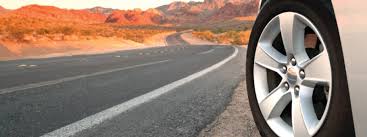
Now you can rest easy knowing you can safely travel up to 50 miles after a puncture and get the kids to soccer practice on time. NanoPro-Tech is used to create the stiff, heat-resistant material used in DriveGuard tires. See how it works. CAN TAKE A PUNCH DriveGuard tires are specifically engineered to be able to take a puncture and keep you moving. Their supportive and tough reinforced sidewalls help ensure your mobility for up to 50 miles at speeds up to 50 MPH. STAYS COOL UNDER PRESSURE Thanks to our proprietary patented high-tech cooling fin design and reinforced sidewall rubber, DriveGuard tires redistribute heat and friction after a puncture, so you can keep driving up to 50 miles even after complete loss of air pressure. DriveGuard is changing the way people think about run-flat tires. Check out some real-world reactions from drivers trying DriveGuard for the first time. *Repairability of DriveGuard tires depends on the tire damage, amount of pressure loss, and vehicle operating conditions.
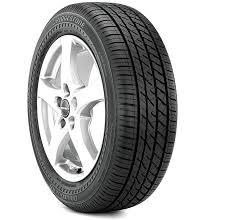
Contact a Bridgestone retailer for details. **Subject to limitations and restrictions. See warranty manual for details. Enter an email address, and we’ll send a link to this page: Enter your phone number to receive a text message with a link for this information. The number will not be used for any other purpose.
canadian tire store ajax ontarioCarrier charges may apply for receiving text messages.
snow tires costco prices Enter your area code and phone number without hyphens (ex. 5555551234)
falken tyres for sale uk THANK YOU Message sent successfully. Bridgestone run flat tires keep you moving. These tires provide peace of mind, allowing you to drive up to 50 miles at up to 50 miles per hour after a puncture to reach a safe place to stop.

Using strong self-supporting sidewalls, Bridgestone has engineered these tires to continue carrying the weight of the vehicle after complete pressure loss.* *Reparability of run flat tires depends on the tire damage, amount of pressure loss, and vehicle operating conditions. Don’t let a flat tire leave you stranded. The innovative Bridgestone DriveGuard is an all season touring tire engineered to go up to 50 miles to a safe place after a flat. It is designed to give drivers of coupes and sedans a smooth, quiet ride with impressive wear life — while providing peace of mind. Potenza RE960AS Pole Position RFT The Potenza RE960AS Pole Position RFT is an all-season tire engineered for premium sports cars and sedans originally equipped with run-flat tires. It provides predictable handling and confident control on dry and wet roads. The Bridgestone Blizzak LM-25 RFT is a winter tire engineered for drivers of performance sedans and coupes originally equipped with run-flat tires.

It delivers impressive grip and control and provides dependable cornering and handling on wet, dry, icy, slushy and snowy roads. The Potenza RE050 RFT tires come as original equipment on many high performance vehicles. It is designed to provide temporary extended mobility for a distance of 50 miles at up to 50 mph even after a puncture has allowed complete air pressure loss. The tire also delivers confident traction along with responsive and predictable dry and wet road handling. No matching results found. Please modify your search criteria and try your search again. Enter your email address: Call For An Appointment Contact at to schedule your installation. Featured Stores are part of the nationwide network of Bridgestone-operated retail stores, including Firestone Complete Auto Care, Tires Plus and Wheel Works. These stores offer specialized knowledge of Bridgestone and Firestone tires, premium customer service and competitive pricing. Car Tips & Advice
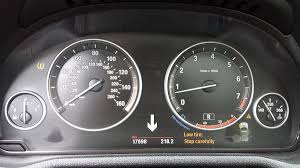
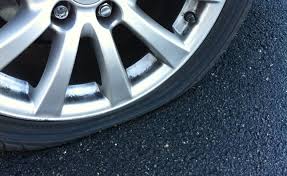
A flat tire often happens at the most inopportune moment or location. Most people may call roadside assistance, but they'll likely be waiting about 45 minutes to an hour. If you know how to change the spare, it's a dirty job and chances are you're not properly dressed for it. Worse yet, your car may have no spare and you don't know how to use the tire repair kit. Enter the run-flat tire. Run-flat or zero-pressure tires can support the weight of a vehicle for a short time, providing the driver with roughly 100 miles of range to find a repair shop. While it may sound like the perfect solution, car owners and car shoppers should know about the trade-offs. Run-flat tires are standard on 12 percent of new vehicles, according to Edmunds data. Traditionally, carmakers have used run-flat tires on sports cars, but in recent years they have started to use them for other cars, too. Cadillac and BMW, for example, have made run-flat tires standard on a number of their sedans. The most common type of run-flat tire in use today is the self-supporting tire.
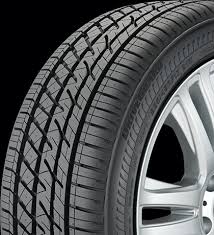
The tire's sidewalls are heavily reinforced to support the vehicle when the air pressure is low or even when the tire has lost all its pressure. You can drive on a flat tire: The primary benefit of a run-flat tire is that it allows you to keep driving about 100 miles after all the air has gone. This means that a person doesn't have to get out of the car in the cold, or the rain, or onto a busy highway or on the street in a sketchy part of town. Drivers will usually have to reduce speed to about 50 mph to get the maximum range. The owner's manual will have exact figures for each tire/vehicle application. Better stability after a blowout: Because this tire can support the vehicle without air, a sudden deflation results in less weight transfer and tread destabilization. Steering and handling will remain near normal. Lower vehicle weight: With the spare and tire repair tools eliminated, vehicle weight should theoretically go down. But it's not as much as you might expect, since run-flat tires weigh more than regular tires, due to the added sidewall reinforcement.
No spare: Vehicles equipped with run-flat tires carry no spare, which means they don't have the jack or tools either. In fact, eliminating the spare and reallocating that space to some other purpose (styling, third-row seat, interior room, etc.) is a big reason why carmakers offer run-flats. Reduced tread wear: A recent study by J.D. Power found that people were replacing their run-flat tires an average of 6,000 miles sooner than owners using standard tires. Opinions differ on why this is, but one theory is that tiremakers put a soft tread compound on a run-flat tire to counter the hard ride. A side effect of the softer compound is a shorter tread life. Blowouts are still possible: If a driver fails to heed or notice the run-flat warning and drives beyond the zero-pressure range or above the speed limitation, the tire can begin to disintegrate, with the same destabilizing effects. Additionally, if the puncture occurred on the sidewall or if the tire hits a large object, the driver would have to call a tow truck.

The J.D. Power study found that "customers with vehicles equipped with run-flat tires are nearly twice as likely as those with vehicles equipped with standard tires to have to replace a tire due to a flat or blowout." Hard to tell if it is low on air: A side effect of the stiffer construction is that the sidewalls do not bulge if the air pressure is low. This means that it is critical to have a tire-pressure monitoring system and check your tire pressure frequently. Harsher ride: The stiff sidewalls that make a run-flat work also result in a harder ride. If the vehicle came with run-flat tires from the factory, the automaker usually tunes the suspension to offset the harsher ride. Cost: Run-flat tires are more expensive to replace. A 205/55R16 run-flat tire at a local shop in Santa Monica, California, costs $239. The standard tire equivalent costs about $174, a $65 difference per tire. Also, many run-flat tires cannot be repaired and often need to be replaced in pairs. Less on-shelf availability: Because run-flats aren't a big-selling tire, drivers shouldn't expect to roll into just any tire store and buy one.

It may be easier to do so in larger cities, but if you're a run-flat user on a road trip and get a flat near a small town, you'll probably have to make a detour to find a suitable tire dealer. Or worse, you may have to stay there overnight, waiting for the tire to be shipped. The self-sealing tire isn't a run-flat tire in the sense that it can operate without air. Instead, it has a layer of sealant inside the tire that can maintain the air pressure in the event of a puncture. If you get a nail in the tire and remove it, the sealant will fill the puncture, as long as it is not larger than 5mm and is near the center of the tread. The biggest advantage of the self-sealing tire is that it resembles a traditional tire. It can be mixed and matched with standard tires and the tread life is the same. The downsides are the higher cost and lower availability. This type of tire isn't standard on new vehicles, but is worth mentioning since it is available as a replacement tire. Continental and Pirelli are two tiremakers that produce self-sealing tires.